As the curtain falls on 2025, we find ourselves at a historical inflection point. If 2023 was the year of "AI Curiosity" and 2024 was the year of "Generative Hype," then 2025 will be remembered as the Year of Autonomy. This year, technology stopped just responding to us; it started acting for us.
From the silicon valleys of Bengaluru to the orbital heights of the Vikram-1 rocket, here is the definitive recap of the breakthroughs that reshaped our world in 2025.
1. The Rise of the Agents: AI Moves Beyond the Chatbox
The most significant shift in software this year was the transition from Large Language Models (LLMs) to Agentic Workflows. At the start of the year, we were still "prompting" AI to write emails or code. By December, we were "deploying" AI Agents.
The Autonomous Workplace
Major players like Salesforce (with Agentforce) and Microsoft (with Copilot Agents) redefined the enterprise. These aren't just chatbots; they are digital entities capable of reasoning, planning, and executing multi-step tasks. In 2025, we saw AI agents that could independently manage medical billing, conduct initial recruitment rounds, and even optimize global supply chains without human intervention at every step.
Open Source vs. Closed Labs
The battle for AI supremacy heated up as open-source models (like Meta’s Llama 4 and Mistral’s latest iterations) achieved parity with proprietary models. The focus shifted from "parameter count" to "reasoning efficiency," with a new class of models designed specifically to think before they speak, drastically reducing hallucinations.
2. India’s Space Revolution: The Flight of the Vikram-1
For the Indian tech ecosystem, 2025 was the year the "New Space" era truly arrived. The highlight was undoubtedly the inauguration of Skyroot Aerospace’s Infinity Campus in Hyderabad by Prime Minister Narendra Modi.
Vikram-1: The Game Changer
The unveiling of Vikram-1, India’s first private commercial orbital rocket, marked a shift in the global space economy.
- Carbon-Fibre Construction: The 7-storey tall rocket is one of the first globally to be made entirely of carbon fibre, offering an incredible strength-to-weight ratio.
- 3D-Printed Engines: Utilizing hypergolic liquid engines produced via additive manufacturing, Vikram-1 proved that high-tech spaceflight could be affordable and repeatable.
- On-Demand Launch: With the ability to launch up to 300kg into Low Earth Orbit (LEO) within a 24-hour assembly window, India has positioned itself as the world’s "quick-response" satellite hub.
With over 300 spacetech startups now active in India, the sector has transitioned from a government monopoly to a vibrant, multi-billion dollar commercial industry.
3. The Year of Quantum: From Theory to Room Temperature
The United Nations officially designated 2025 as the International Year of Quantum Science and Technology, and the labs did not disappoint. We finally crossed the bridge from "experimental curiosity" to "commercial utility."
Room-Temperature Qubits
Historically, quantum computers required temperatures colder than deep space to function. In 2025, breakthroughs in "Twisted-Light Qubits" allowed for electron entanglement at much higher temperatures, bringing us closer to the dream of a quantum computer that doesn't require a massive cryogenic setup.
Quantum-AI Fusion
We saw the first successful integrations of Quantum processing units (QPUs) with AI training clusters. This "Quantum-AI" hybrid approach has begun to solve "unsolvable" problems in molecular biology, specifically in simulating how new drug compounds interact with human proteins at an atomic level. This has effectively cut the drug discovery timeline from years to weeks.
4. The Robotics Renaissance: From Factories to Front Doors
If you looked at a robot in 2024, it likely looked like a machine. In 2025, robots began to look—and move—like us.
- Generalized Dexterity: Thanks to Vision-Language-Action (VLA) models, robots achieved "human-like" dexterity. This year, we saw robots capable of folding laundry, sorting delicate organic waste, and even performing assisted surgeries with a level of precision that exceeds human capability.
- Humanoid Deployment: Startups like Figure and Tesla (with Optimus Gen-3) began limited pilot programs in actual factory floors, not just as demos, but as productive members of the workforce handling "dull, dirty, and dangerous" tasks.
5. Green Tech and Energy: The Sustainability Shift
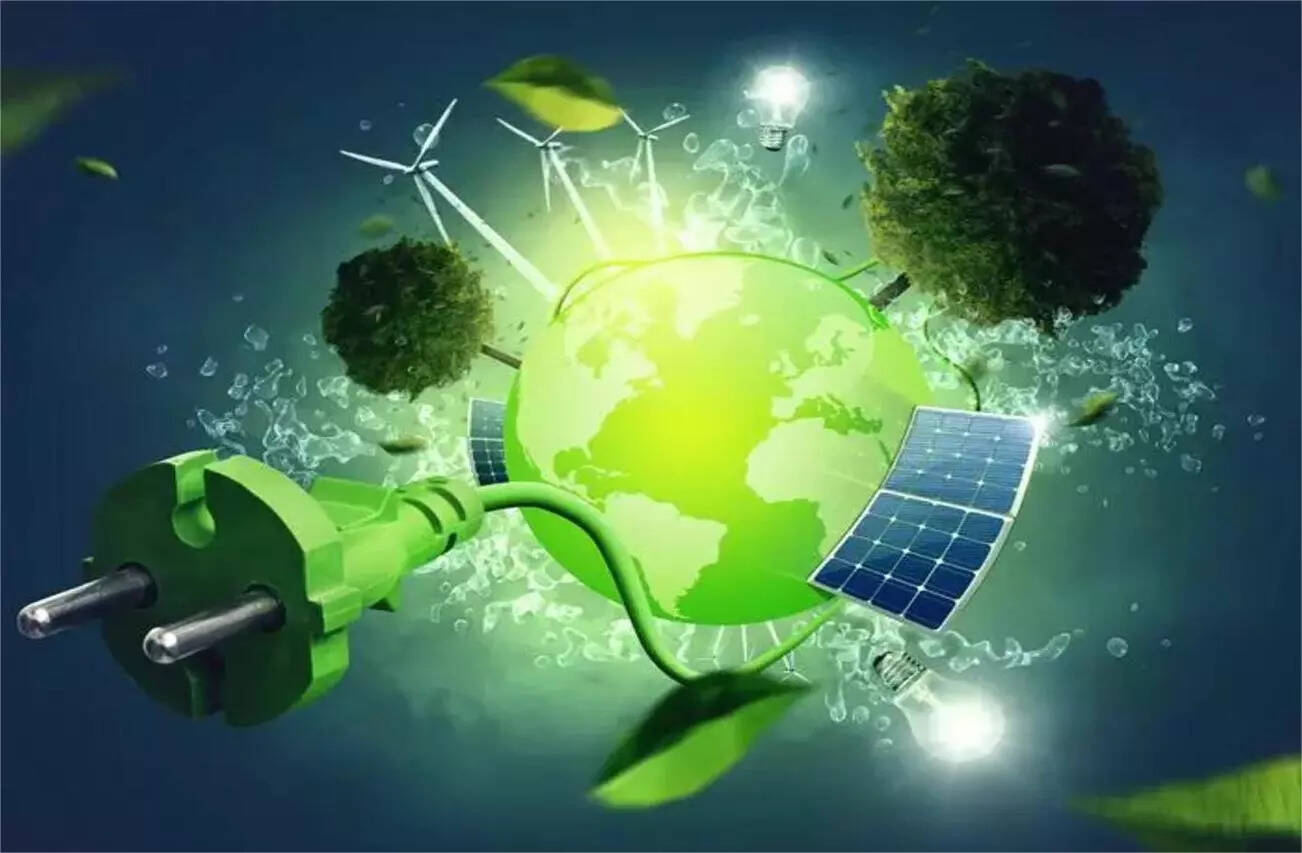
As AI’s energy demands skyrocketed, 2025 forced a reckoning in how we power our digital world.
- Small Modular Reactors (SMRs): Tech giants like Amazon and Google signed historic agreements to deploy SMRs to power their massive data centers, signaling a "Nuclear Renaissance" driven by the need for carbon-free, 24/7 power.
- Circular Electronics: A major movement in "Urban Mining" took hold this year. New technologies allowed for the recovery of 95% of rare earth metals from discarded smartphones, significantly reducing the environmental impact of the hardware boom.
Conclusion: Looking Toward 2026
As we recap 2025 for the Vikram blog, the message is clear: The boundary between the digital and physical worlds has blurred. We are no longer just using tools; we are living alongside autonomous systems. India is no longer just a "service hub"; it is a "product and launch hub." Whether it’s an AI agent managing your calendar or a Vikram-1 rocket carrying a startup’s dreams into orbit, 2025 was the year the future stopped being "coming soon" and actually arrived.
Stay tuned to Vikram Blog for deeper dives into each of these sectors as we head into the unknown exciting frontiers of 2026!


0 Comments